
Review · MALAGA
45 minutes flamenco dance class for family in Málaga
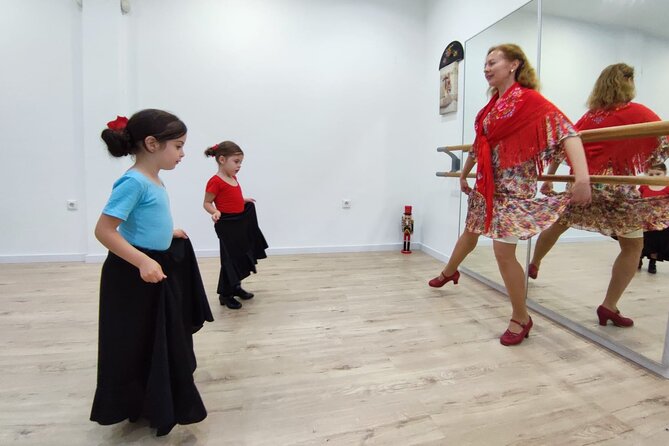
Small steps, big Spanish spirit. This 45-minute family flamenco class gives children from age three a cheerful first look at Andalusian dance, with easy footwork, arm movements, music, and props. I like that it is built for families rather than trained dancers, and I like the small group limit of seven people, which should make it easier for children to follow the instructor.
The class also offers a useful break from Málaga’s usual sightseeing routine. You get to move, laugh, and share an activity instead of simply walking from one monument to another. The main consideration is that adults are expected to join in, not just watch, and one family found it disappointing that a father could not observe from the side.
Key points to know before booking
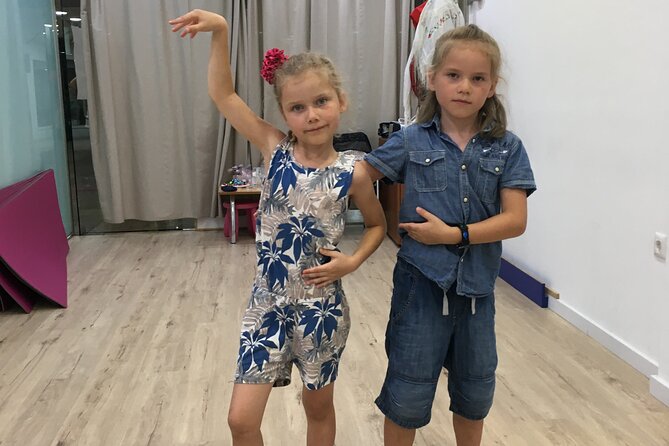
- Made for children from age three: The pace and movements are designed for young beginners, so your child does not need dance experience.
- A real rumba flamenca finale: You learn a simple choreography based on a popular Andalusian party style.
- Props add playful variety: The class can include a fan, shawl, hat, and cape, giving children more ways to enjoy flamenco.
- Small group of up to seven: This keeps the activity personal and manageable for families.
- Near Plaza de la Constitución: The meeting point is very central, close to Málaga’s main square.
- Caterina receives warm praise: Families especially appreciate her kind, gentle teaching style and helpful approach.
Why this short class works for families
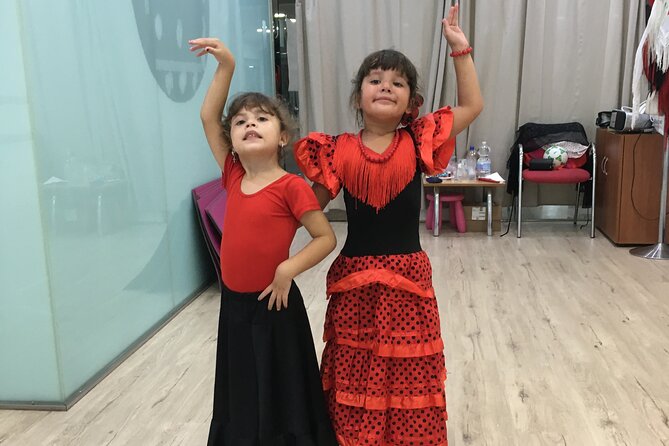
Flamenco can look difficult from the audience. Fast footwork, sharp arm movements, dramatic poses, and serious faces are part of the show. For a young child, that can make the dance seem out of reach.
This class takes a softer path. You begin with a gentle warm-up and copy movements together with your child. The early exercises help everyone get used to the rhythm without asking for perfect technique. That matters when your group includes a three-year-old, a tired parent, and perhaps an older child who wants a little more challenge.
I like this kind of introduction because it treats flamenco as a shared cultural activity, not a test. Your child can try the steps, lose the rhythm, smile, and start again. The aim is connection and enjoyment, with a simple lesson in Spanish culture along the way.
The class uses flamenco music suited to children. That should help keep the mood light and make the session less formal than a serious dance lesson. Families who want a polished performance may find the class too basic, but families looking for a fun first taste should find the level reassuring.
More Flamenco Dance Classes in Malaga:
- Málaga: Learn to dance flamenco rumba in 45 minutes
★ 4.9 · 245 reviews - Fun, fast, flamenco: learn to dance flamenco rumba in 45 minutes
★ 5.0 · 112 reviews - 45 minutes flamenco dance class for family in Málaga
★ 5.0 · 14 reviews
Starting with warm-up and basic movements
The class opens with a gentle warm-up. You and your child do the movements together, which is useful for both confidence and coordination. Instead of sending children straight into complicated footwork, the instructor gives them time to settle into the room and watch what others are doing.
Next come the basic exercises for the feet and arms. These are the building blocks of flamenco. Your child learns how to place and move the feet, while the arms and hands add the expressive part of the dance.
For adults, this section may seem simple. That is part of its value. Young children need clear movements they can copy quickly, and parents need enough structure to join without feeling awkward. If you have never tried flamenco, you may appreciate having the basics broken into small pieces.
Caterina is praised for being kind, gentle, and helpful. Those qualities matter more here than a long technical lecture. Children often respond best to a teacher who keeps the mood warm and lets them try without pressure.
The small group size should also help. With no more than seven participants, you are not lost in a large studio full of moving bodies. The exact amount of individual attention can vary, but a small class gives the instructor a better chance to notice when a child needs another demonstration.
Learning the rumba flamenca choreography
The main dance section centers on a fun rumba flamenca routine. Rumba is a simple and popular style in Andalusia, and it is often danced at parties across Spain. That makes it a sensible choice for a family class: the style feels social, rhythmic, and easy to pick up.
You learn a short sequence rather than a full professional routine. Expect repetition, basic steps, and arm movements that gradually fit together. The goal is not to produce a flawless performance. It is to give you and your child the satisfaction of recognizing the pattern and dancing it from beginning to end.
I see this as the strongest part of the activity for families. You are not only watching Spanish culture from the outside. You are trying one small piece of it with your child. Even if your feet go in the wrong direction, the shared effort becomes the memory.
A short class also works well in a Málaga sightseeing schedule. Forty-five minutes is long enough to feel like a proper activity, but short enough to fit between time in the old center, lunch, or another attraction. You will not lose half a day to a dance lesson, which is helpful when young children have limited patience.
The class costs $47 per person. That is not a bargain if one family member only wants to sit and watch, since the price applies to participants. It becomes more reasonable when you value the small group, the instructor-led practice, the cultural setting, and the chance to take part as a family rather than attend a simple stage show.
Props that make the lesson memorable
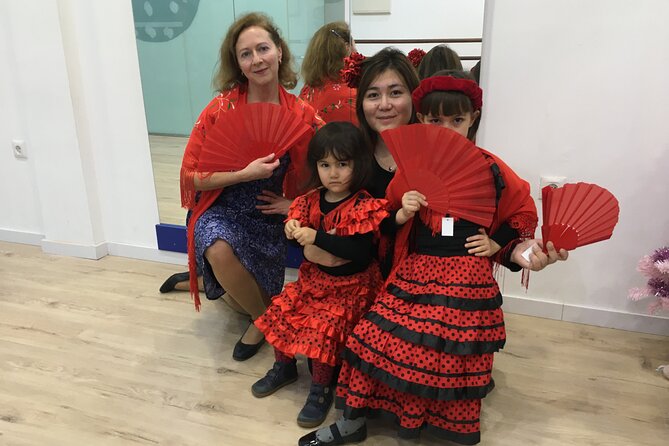
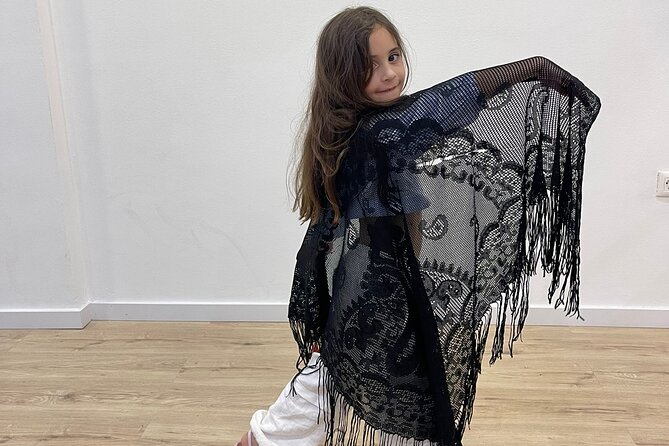
The class includes exercises with a shawl, and the activity can also involve a fan, hat, and cape. These props add a theatrical touch without requiring difficult choreography.
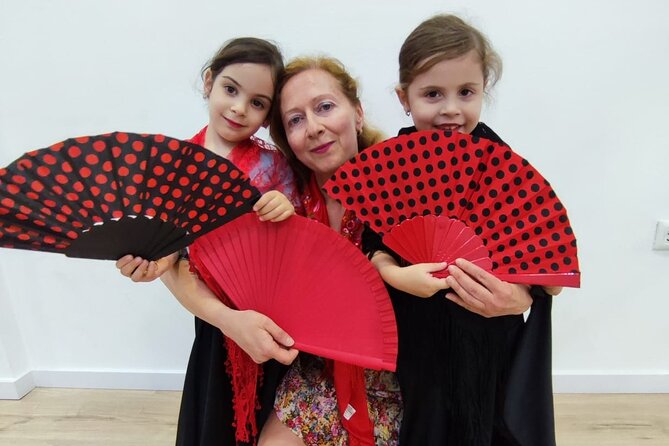
For children, a fan or shawl can make the lesson feel like play. Props give them something to hold and move, which can help maintain attention during the basic exercises. A cape or hat also introduces the visual language of flamenco in a way that young children can understand quickly.
The French-language feedback about the class specifically praises working with a fan, shawl, hat, and cape in a simple, cheerful setting. That gives you a useful idea of the session’s character. It is not only a footwork lesson. It brings in the gestures and drama that make flamenco so recognizable.
Still, you should keep your expectations sensible. The class lasts only 45 minutes, so the props support the lesson rather than become separate activities. The exact order and amount of time with each item may vary.
More Flamenco Shows in Malaga:
- Malaga: Teatro Flamenco Malaga Live Flamenco Show
★ 4.7 · 4,254 reviews - Malaga: Authentic Flamenco Show at El Gallo Ronco
★ 4.7 · 885 reviews - Malaga: Show and Food at Alegría Flamenco and Restaurant
★ 4.6 · 740 reviews - Malaga: Authentic Flamenco Dinner Show at Restaurant VinoMio
★ 4.4 · 457 reviews
A cultural activity, not just a dance workout
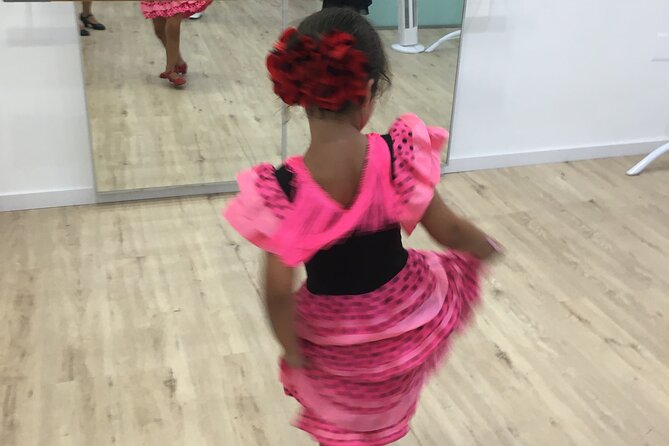
Flamenco is closely linked with Andalusia, and learning a few movements gives children a physical way to connect with local culture. You are hearing Spanish music, copying traditional gestures, and learning a dance style associated with social gatherings in the region.
I like that the class presents flamenco in a family-friendly way. Young children do not need a long explanation of dance history to feel part of the experience. They can learn through movement, music, and simple objects.
The activity also offers light physical exercise. You warm up, work the feet and arms, repeat the choreography, and finish with a sense of movement and energy. It may be a welcome change after a morning spent walking through Málaga’s streets.
The benefits here are modest but real. This is not a fitness class, and you should not book it for a serious workout. Its better reward is the shared activity. Parents and children have to watch one another, copy the same steps, and laugh through the mistakes.
That can make the class a good choice early in a family holiday. You begin with something active and social, and the child gets an early connection with Spanish life that does not depend on standing quietly in a museum.
What the central Málaga location means
The meeting point is very close to Plaza de la Constitución, Málaga’s main square. This places the activity in a convenient part of the city center, though the exact studio address should be checked when you book.
A central location matters with small children. You can combine the class with time in the old center without planning a separate trip across the city. It is also easier to pair with a meal, shopping, or a walk through nearby streets.
Give yourself enough time to find the meeting point. The information supplied identifies the general area rather than a detailed street address, so you should not rely on arriving at the last minute. A child may also need a bathroom stop or a snack before the class.
Wear comfortable clothes and shoes. You need to move your feet and arms freely, and stiff clothing would make the simple movements less pleasant. There is no need to dress like a flamenco performer. Comfort is more useful than style here.
The class is offered in English and Spanish. That makes it accessible to many international families, though young children may follow demonstrations more easily than spoken instructions anyway.
The parent participation question
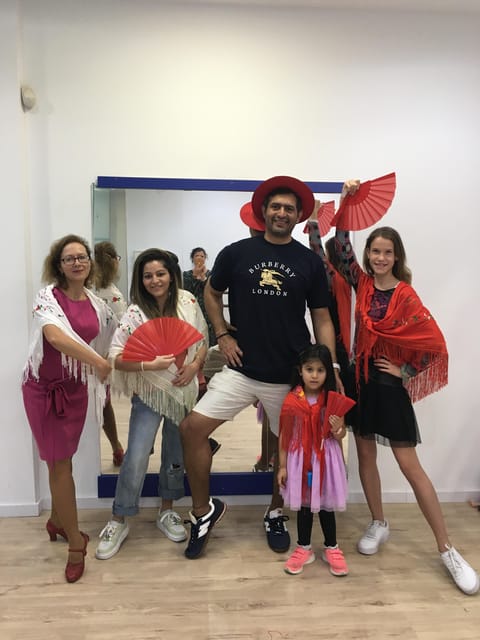
The activity is designed for the whole family, including mothers, fathers, and other family members. You should plan to take part beside your child rather than assume you can sit at the back.
That approach has a clear benefit. A hesitant child may feel much more comfortable when a parent is copying the instructor too. Children also enjoy seeing adults make mistakes. It turns the class into a shared game instead of a lesson where the child feels watched.
There is one point to consider carefully. One family found it disappointing that the father was not allowed to watch without participating. The policy may be important if one adult in your group cannot dance, prefers to take photographs, or needs to stay with a younger child.
I would contact the provider before booking if you need a non-participating adult in the room. The activity information does not promise spectator seating, so it is safest to assume that everyone booked is part of the class.
How the class suits different ages
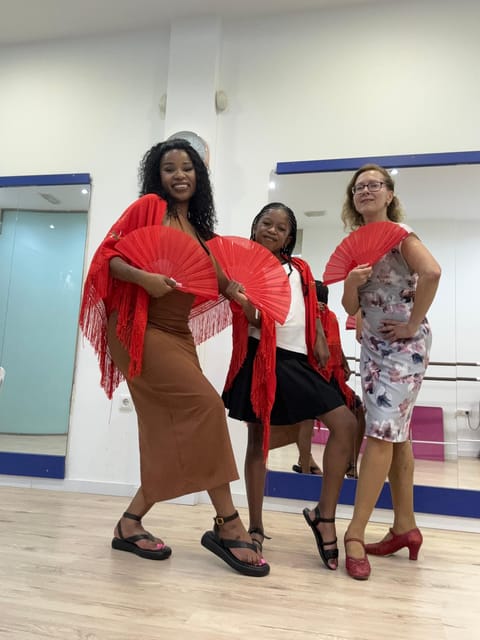
The class is adapted for children from age three, which is its clearest strength. At that age, the simple steps, children’s music, and props should be more useful than a formal lesson built around technique.
Children aged five and nine also fit the activity well. A family with children in those age groups found the lesson easy and enjoyable for everyone. That age spread is encouraging for siblings who do not share the same attention span or physical ability.
Older children may still enjoy the experience, especially if they like music, costumes, or performing. However, the class is aimed at beginners and younger participants. A teenager looking for serious flamenco training may find it too basic.
Adults who feel uncoordinated should not be put off. The class is intended to be easy to follow, and the feedback repeatedly praises its fun, approachable nature. You do not need to know Spanish dance beforehand.
The best match is a family that wants to try something together. It is less suitable for someone who wants a long technical workshop, a formal performance, or a lesson focused on advanced footwork.
Is $47 per person fair value?
At $47 per person, this is a mid-priced short activity rather than a cheap add-on. Since the lesson lasts 45 minutes, the price may look high if you measure value only by clock time.
I would judge it by the experience you are buying. The fee includes the flamenco class and guide information, with an instructor teaching a small group of no more than seven. You are also paying for a planned cultural activity that works for children from age three, not just an open dance session.
The value is strongest when both adults and children participate. A family of several people will pay more, so it is worth deciding in advance if every person wants to dance. If one parent plans to wait outside, the cost can feel less attractive.
The class also has practical booking flexibility. You can cancel up to 24 hours in advance for a full refund, and you can reserve now and pay later. These terms reduce some of the risk when you are arranging a family schedule around meals, naps, and changing plans.
Who should book this Málaga flamenco class?
I would recommend it most strongly to:
- Families with children aged three and up
- First-time visitors who want a simple cultural activity
- Parents looking for a break from walking and sightseeing
- Children who enjoy music, movement, costumes, or pretend play
- Families who prefer a small group to a large public workshop
- Adults willing to participate rather than sit on the sidelines
I would think twice if your family wants an advanced dance lesson or if one adult needs to watch without joining. The session is short and beginner-focused, so it will not replace a full flamenco course.
The nearly perfect 4.9 rating from nine reviews supports the idea that the class delivers what it promises: a friendly, easy, family activity. The praise is especially consistent about happy children, simple steps, and Caterina’s warm teaching style.
Should you book it?
Book this class if you want a light, active way to introduce your child to Spanish culture in central Málaga. The rumba choreography, children’s music, and props give the lesson enough variety to keep young participants interested, while the 45-minute length protects you from the usual family problem of an activity that runs too long.
Before booking, confirm that every paid participant is ready to join the dance. If your family accepts that point, $47 per person buys more than a few steps. It gives you a shared memory, a small taste of Andalusian tradition, and a welcome change from simply looking at Málaga.
FAQ
Where does the flamenco class take place?
The meeting point is very close to Plaza de la Constitución, Málaga’s main square.
How long does the class last?
The class lasts 45 minutes.
What is the minimum age for children?
The class is adapted for children from three years old.
Do adults take part in the class?
Yes. The activity is designed for children to dance together with their mother, father, or other family members.
How many people can join the group?
The group is limited to seven participants.
Which languages does the instructor speak?
The class is available in English and Spanish.
What should I wear?
Wear comfortable clothes and comfortable shoes so you can move easily.
What will I learn during the class?
You will do a gentle warm-up, learn basic foot and arm exercises, practice a simple rumba flamenca choreography, and work with flamenco props such as a shawl. The session may also include a fan, hat, or cape.
Can I cancel the booking?
You can cancel up to 24 hours in advance for a full refund. You can also reserve now and pay later.
Just added around Malaga
- Malaga: The Ultimate Flamenco & Tapas Tour★ 5.0 · 18 reviews
- PREMIUM TAPAS TOUR: Paella, Tapas, Winery and Flamenco★ 4.5 · 36 reviews
- 45 minutes flamenco dance class for family in Málaga★ 5.0 · 14 reviews
- Authentic Flamenco Show Malaga★ 4.5 · 48 reviews
- Flamenco Benalmadena Show★ 5.0 · 25 reviews
- Tablao Flamenco Los Amayas Admission Ticket★ 5.0 · 3 reviews
- Flamenco, Tapas and Wine Tour: Best of Málaga in one Evening★ 5.0 · 52 reviews
- Horse and Flamenco Show in Malaga with Dinner★ 4.0 · 26 reviews
Flamenco Dance Classes, compared.
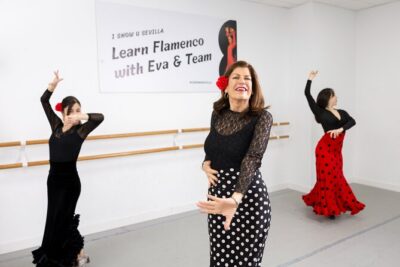
Flamenco Dance Class in Seville with optional Flamenco Costume
Read our review →Flamenco Dance Lesson: 60-Minute Class in Seville
Read our review →
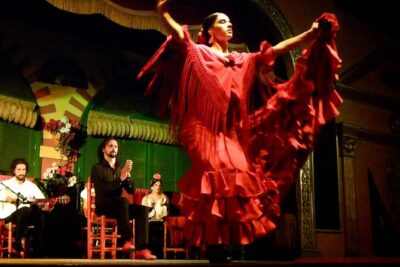
Flamenco Dance Lesson with Optional Show in Seville
Read our review →
Learn to Dance Flamenco from Zero: Fun Beginners’ Dance Class
Read our review →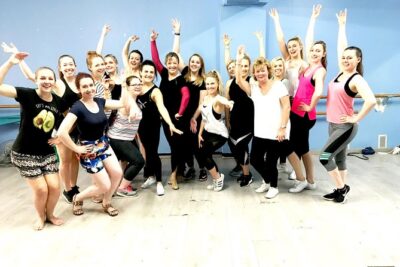
Browse the lists this tour appears in